Monday, July 3, 2023

Restoration Protocol --- Sample Cloak in Action, The Daoguan goes to the Mountain


 IT'S BEEN nearly a year after the skull surgery to remove an ill-placed tumor that was cutting off a vein coming out of my brain. They said I would be gone by October 2023. This recovery year has been extremely traumatizing and alienating. I put on my cloak and made some adjustments, so I could make the journey I need to, now that I am ready and somewhat able. Taking some time at some mineral springs, and bringing the items identified by going through the Cloak Protocol.


FOR THE OUTSIDE

hydrotherapy, preferrably in mineral water, hot springs, xenotes

spray bottle with water/extract/tea etc for skin freshening, mobile bidet with dab rags, kula cloths

hand crafted restoration pod: magnets, homeostatic reflective materials, infrared, vibration tech, aromatherapy, music or tuning forks, high vibration visuals

natural fiber drying cloths for wet and dry brushing after bathing, non toxin adjacent (talking to you, bamboo processing) and fairly farme; camp towels, bath mitts, back scrubber, seat

basalt heat rocks, hot water bottles, rosemary or eucalyptus sprigs for sauna whisks

oatmeal for soothing facials or drawing out stress, coffee for light acid cleansing over whole body, olive oil, coconut oil, almond rose oil, avocado oil, apricot kernel scrub, clays, silicone scrubbies

pull trauma from tissues with the metals: sodium (epsom), magnesium (milk of mag) and potassium (use banana or just peel)

apparel for relaxing, for compression, tens units, Salon Pas adhesive capsaicin

lemon extract & water spray for toner needs

wool throws, posture pillows


INSIDE

alkaline water, magnetized or otherwise treated (singing bowls, sun/chill/shake, etc)

psyllium and bentonite parasite and colon cleanse, Vit C, MSM in equall measure for cellular permeability/ adaptogenic peroperties; glutamine, electrolytes, herbs from Dr. Sebi's Village

apples 2x/day, macronutrient/ alkaline diet also from Dr Sebi's Nutritional Guide, cross referenced with foods from the Glycemic Index good columns, also cross matched for my Blood Type and particular for regenerating damaged Vagus Nerve

Sonicare toothbrush, herbal tooth powder, coconut oil, flossers, non fluoride mint paste

hydrogen peroxide and cotton swabs for general cl, cleansing ears


UPSIDE

Qi Kung, yoga, twists and stretches, left and right mirroring, exercises to reconnect neurons

breathing, meditation, Alexander School techniques of brain communication

yoga bricks or body aligning pillows, my souped up wheelchair

jounal, notebook, planner and pens


DOWNSIDE

magnetic eggcrate foam sleep mattress, reflective material cover, body aligning pillows

herbs, salves, hot water bottles, battery powered candle w/timer, aromatherapy flight:

Cedar    Sweetgrass    Apricot

Bergamot    Rose    Myrtlewood

Cucumber      Green Tea      Fig

Honeysuckle    Jasmine    Tobacco


Wednesday, June 21, 2023

PsyOps in the American Forests -- Post Script to the PNW Series


WHAT is happening in our forests? 


QUALITY OF ARGUMENTS

The question is: can an organism not previously categorized be discovered in the North American continent? Sides have polarized in a way few subjects have commanded. One believes in circumstantial or lucky conditions to explain repeated findings, is reductionist without offering substantive alternatives, other than aforementioned luck, and very COMPLICATED in that it requires several things to happen in certain order, randomly but repeated similarly and simultaneously.

Another is evidence based, and growing in sample numbers every day; inclusive, taking underrepresented sources into account; agrees with all the evidence examined and accepted by multiple scientists; and adheres to Occam's razor, providing the simplest explanation (notwithstanding the recent questions regarding this tenet).

THINK OF IT

The practical nature in claiming any or all encounters and tracks have been faked is to claim that:

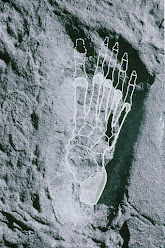
A person or group of people have been perfectly impersonating an 8 foot tall beast using a stretchy, hairy costume with muscles of Mr. Universe, running around usually at night, vision not impaired in the least, and who is perfectly agile on stilts with weights at the bottom to leave actual impressions professionally measured to have been up to about 1000 pounds each with strides 6 feet apart;

A person or group of people ascertained the plans of one or more famous explorers, and since the 1950s has laid tracks ahead of said famous exploerers to fool them just for fun, letting them take the credit for being the first ones up those mountains;

A person or group of people ascertained the location of police and sheriff vehicles, placing enough individuals around the boundary of their routes, spending many nights and lucky guesses in order  to fake encounters with them WHEREVER and IF they may be answering the call of nature, and as with many hunters, knowing full well and of their own sound mind choosing to face the consequences of running up on the best armed and the most highly trained people who carry authority to respond how they see fit;

A person or group of people continue to ascertain the plans of outdoorsmen on any planned and unplanned trips into the wilds of the extreme north American continent, making the same tracks over all the beaches all at once the day before, just so wherever the boat happened to be landing, there would be a discovery;

Snow crushed the trees together in geometric shapes, breaking off all the needles/ branches neatly;

Wind blew only this tree in a 45 degree angle, in a group of many, sometimes without killing it;

Treefall caught these flexible trees, notching them into arches with other trees or windfall;

Puma, acting unnaturally in typical recorded behavior of burying their kills, and demonstrating they're selectively at times bionically stronger than their typical pull weight of about 70 lbs.;

Wolves, which have been absent until recently found in the single digits in the South Cascades;

Coyote, giving up normal behavior, apparently bringing knives to dinner;

Elk, confused and stumbling up a tree, pooped from up there all night.


THESE ONE IN A MILLION OCCURRENCES HAPPEN EVERY DAY 

AND HAVE BEEN RECORDED FOR MILLENNIA


WHAT STANDARD IS APPROPIRATE

The lowest standard of proof in the legal world is termed Preponderance of the Evidence. This standard comes into play when evidence demonstrates the claims have a greater than 50% chance to be true,  and is considred satisfied if it can be demonstrated it is more likely to be true than not true.This is baseline proof that gets people in jail. There is a greater standard that is applied in capital offense cases, although more vague, stating the evidence needs to be Clear and Convincing. We must then determine this definition, which states we must demonstrate that it is "highly and substantially" more probable to be true than not true. The next and highest standard, utiilized in criminal cases, is termed Beyond a Reasonable Doubt, defined as sufficient proof such that no other plausible account or conclusion is possible.

The critical mind observes that in the legal arena, one simple obstacle that is overcome in each instance is how that judge or that jury sees the body of evidence. If they are more than half sure, someone goes to jail and /or pays lots of money.  If they "feel satisfied" that the evidence is highly and substantially more probable than the mere 50 %,  or are convinced  "no other plausible conclusion exists," this person is convicted of serious crimes and may even get a lethal injection. Eyewitnesses aren't required for the death penalty; recordings, material findings -- no particular recipe is required, just that whatever IS presented needs to give people various degrees of certainty.

The inquiring mind then sees that greater than 5% of death row cases alone are overturned due to prosecutorial misconduct, namely withholding favorable evidence and making improper arguments. This number does not reflect any misconduct in cases other than capital punishment. In looking just a little further, we see the ugly truth play out that humans themselves are unjust in judging, letting irrelevant factors determine whether someone is sentenced to death. Studies show that misperception, gender and race bias, and even geography, are 'constitutional problems' and have been commented on by the late Justice Bader Ginsberg when she said, "I have yet to see a death case among the dozens com­ing to the Supreme Court... in which the defen­dant was well rep­re­sent­ed at tri­al.”

Tens of thousands of people have made sworn statements about their experiences with very real animals, and hundreds of eyewitness accounts around the world match over time --  more than enough, when properly and academically examined, to put thousands of people in prison or to death, if this were a trial --  just nowhere near good enough to acknowledge the existence of an organism. Thank goodness this crowd was not there to give Darwin their lack of approval of his measly drawings and observations. How many species were acknowledged and categorized when a retired minister drew pictures in his little journal. Most people in the world will never see a komodo, gorilla, or leatherback. They usually don't get a vote on scientific discovery validation, the way they  signal disapproval of the subject, but then again their voting is not appropriate. Invalidating tens of thousands of sightings is equally inappropriate, especially in light of the weight the law gives it when a man's life is at stake. 

Cryptids were organisms deemed by science to be 'cryptic' in nature: those who hide all too well, camouflage expertly, and are active in places or times not normally accessible by humans. One could argue that all animals we discover from here on out would be considered cryptids. Reports and other material findings go for years only to be thwarted and ridiculed hen we persevere in its detection. We have since discovered gorillas and other creatures we used to also christen 'mythological.' The poorly weighted arguments of many, and the silencing of voices, is added to the purposeful subterfuge by multiple authorities. You can identify them by their need for codes of silence and losing materials turned in by the public, or denying access altogether. If it was a new species of frog, instead of a bipedal intelligence, would this precipitate the same type of response?


When you can't deny it, lean into it! Joke publication


There is no extant source or credit given for what is on this other joke publication


A dog supposedly crawled 28 feet up a hollow tree and got stuck, mummified


Whoever depends on them for food is hurting this year


Many closures this year during migration times


🙔

Sunday, June 18, 2023

An Interdisciplinary Approach to Paleo-ontological Ecology of the PNW: Part Three


Here we focus on what constitutes evidence, which is defined as "the available body of facts or information indicating whether an assertion is true or valid." In particular to our topic, an unacknowledged species living in North America, let's review what we know about the animals in this Neo-arctic biome. Sightings, pictures, or carcasses of large animals, or any animals for that matter, are bonus, but not required as proof they inhabit an area, if sufficient signs and markings are present that typically indicate such. This can include, but not be limited to: their scat, their leftovers, and other signs of activities of daily life. Wildlife biologists and ecologists accept these as evidence the animal is present, as do park rangers, and act accordingly in the protection of both humans enjoying a day at the park, and the safety of the animal populations in question. The amount and age of the evidence will determine numbers, length of stay, perhaps whether it is migratory or not (requiring longer term monitoring and knowlege of potentially distant resources) or was maybe just a fluke appearance. This is textbook for hobby sightseers and professional wildlife management alike, as a general rule and common practice.


Information below comes mostly from the Mountain Lion Foundation


SCAT 

 Raccoons frequently use the same potty location, and hence, their feces are discovered in huge piles known as latrines. Coyote poop is also cylindrical and may include the same items as bear scat, while both bobcats and mountain lions poop in segments. Coyotes frequently deposit their piles of scat in the middle of pathways as a territorial sign, cylindrical and about 3 to 5 inches long and 3/4 inches wide. It is left behind as a tubular, knotted rope with a twisted end that sets it apart from the bear’s plain, blunt tubes. Bears consume a lot of grass and insects in the spring, which causes their excrement to frequently be green and cylindrical with grass visible. Bear scats tend to be looser and larger in the late summer and early fall, with noticeable berries and apple fragments.
 

Bear-like in shape but smaller in size, coyote poop is cylindrical and is about 3 to 5 inches long and 3/4 inches wide. It is left behind as a tubular, knotted rope with a twisted end that sets it apart from the bear’s plain, blunt tubes. Coyotes frequently deposit their piles of scat in the middle of pathways as a territorial sign. As is typical for feline scat, bobcat scat is cylindrical like a bear’s but smaller, more circular, and divided. When you tread on it, it won’t compress because it is incredibly dense. The scat is 0.5 to 1 inch wide and 3 to 5 inches long. It also has hair and bones and berries, fruit, and grass. Additionally, you might notice a scrape from the bobcat’s attempt to hide its scat. All these are readily available for viewing online.

If there were other apex animals, they would be leaving scat unidentifiable or at least confusing and difficult to categorize.


 KILLS

BEAR leave deep tooth marks (about ½-inch in diameter) on the neck directly behind the ears on the carcass. On large animals, look for large marks from claws (½ inch between individual marks) on the shoulders and sides. After an animal is killed, a black bear typically will open the body cavity and remove the internal organs. The liver and other vital organs are eaten first, followed by the hindquarters. Udders of lactating females are consumed. Predation by bears must be distinguished from attacks by coyotes or dogs. COYOTES typically attack the throat of their prey. DOGS chase their prey, often slashing the hind legs and mutilating the animal. Tooth marks on the back of the neck usually are not found on kills made by coyotes and dogs. Claw marks are less prominent on kills by coyotes or dogs, if visible at all.  Livestock behave differently when attacked by bears. Sheep tend to bunch when they are approached, and three or more often will be killed in a small area. Cattle tend to scatter when a bear approaches usually resulting in the death of a single animal. Hogs evade bears in the open, and are more often killed when they are confined. Horses rarely are killed by bears, but they do get clawed on the sides.  

MOUNTAIN LION kills are typically found under brush, shrubs, and trees. They don't leave their food under open sky, but cover the carcass with leaves, sticks, and grass. Around the stash can also show the raking of the paws in the dirt as the lion pulled debris over it. The lions nip deer fur from their kills, leaving a telltale incisor - shaved tufts around the area about 1" across. The feeding begins at the ribs, eating the lungs, heart, and liver first. The stomach will be missing, as the cats remove it upon opening the chest cavity to prevent the contents from spoiling the meat, since it takes a few days to eat it all. The spine and partial skull will be ingested to gain nutrition from the marrow that the cats cannot synthesize for themselves.When left to their meal, a mountain lion leaves the toothy part of the skull, the tail and the legs.

If there were other apex animals, they would be leaving kills that are outside the norm, or at least confusing and difficult to categorize.


This kill was attributed to coyotes.


These were attributed to cougars.
 

This was attributed to getting antlers stuck in the branches and dying in a fire.
 
They said this deer got its head stuck between the trees and died.


Not to hammer it too heavily, but in case anyone else needed to see more experts weigh in or any confusion remained about what puma do in North America:


FOSSILS, PHOTOS, VIDEOS, RECORDINGS

The Mammoth Steppe was a complex biome that changed over time and across the region. This resulted in a mosaic-like ecosystem that varied in response to a constantly changing climate. During the Pleistocene, the climate changed much more dramatically than it has during the last 10,000 years, the period known as the Holocene, a remarkably stable climatic period compared to the preceding million years or so. The unstable climate of the Pleistocene caused rapid changes in the plant communities and thus forage for megafaunal herbivores. Abundance and distributions of these animals would have varied in response to the changes. Being large, the megafauna would have been able to move across the landscape tracking favorable patches of habitat both seasonally and over longer time scales.

This was a complete ecosystem of megafauna with herbivores and the predators that consumed them. Like most ecosystems, there were many more herbivores than carnivores. The giant short-faced bears may have mostly scavenged already-dead herbivores (Matheus 1995), but brown bears, lions, and wolves undoubtedly hunted and killed their prey. Radiocarbon dates suggest the lions may have specialized in hunting horses, which coincidentally comprise more than half of the number represented in the cave paintings to date. It is also interesting to note the location of the entrances to some of these caves is what rules out homo sapiens for access, which could be answered by this hominid and their purported abilities. We have an abundance of fossils with a variety of speciation.


There can be too much emphasis placed on using fossils for any argument. C-14 analysis is effective for bones up to about 45,000 years old; older bones do not retain enough carbon to be dated using this method. Unfortunately, there are no effective techniques for dating bones older than this, so many finds on file remain silent as to their age. Then there is the barrier of cost -- hundreds of dollars per sample. A true scientist has to ask themselves, what is the statistical significance of data from such a small sample number of available or appropriate sources, if  the result is such a low confidence figure that it's rendered tantamount to useless? 

Especially in light of other, much larger sample numbers of sources that have been not just accepted by courts of law, but encouraged -- and sometimes, by subpoena, REQUIRED. These are thousands of pictures, videos, and recorded sounds, plus hundreds of thousands of matching eyewitness accounts around the world, spanning hundreds of years into historical texts. There's more proof that a human-ape hybrid type hominid extisted, and continues to exist, than there is about the life of Jesus. The rational mind has to ask why one is acceptable and the other is denied, and they don't even correlate to the side with the larger body of supporting information. It would appear on the surface that any argument relying on absence of information from a mode as problematic as fossils and carbon dating has nothing to offer as an explanation here or move us forward.

Ultimately, Geiss was a believer in the ability of the White Tail deer species to adapt and overcome -- how equally applicable and appropriate is it to say of any higher-end species trying to thrive these days than "I hold out hope based on all the above that whitetails can take whatever is thrown at them, that even human ignorance can’t end a multi-million-year-old survival specialist."  Some years after this article came out, here we are, watching the populations strain:


Lindsay Thomas, Jr.,  an editor of multiple deer-focal magazines (among other things) concluded his article The Oldest Deer on Earth with a gentle warning that there are "new threats" that individually have been unsuccessful, but compounded could net a future where only stabled deer exist, which would mean the extinction of anyone else depending on them. He writes, "I know many hunters yawn at the paleontology .... But knowing that whitetails are the oldest deer makes me feel an even greater responsibility to be a good steward of this animal. We hold no less obligation to protect other deer, other game species, or any other wildlife."


When we look back and see only one set of footprints in the sand, we will know we were poor stewards.


🙔 


TBD : Part 4: PsyOps in the American Forests -- Fodder for Thought


Saturday, May 27, 2023

An Interdisciplinary Approach to Paleo-ontological Ecology of the PNW: Part Two


The Very First Hominin


GIGANTOPITHECUS
 
Gigantopithecus is an extinct genus of ape from roughly 2 million to 100,000 years ago during the Early to Middle Pleistocene of southern China, although other identifications have also been made in Thailand, Vietnam, and Indonesia, and unfortuantely, carbon-14 analysis is only effective for bones up to about 45,000 years old; there are no effective techniques for dating bones that do not retain enough carbon to be dated using this method. Additionally, not all bones collected have been dated, because analysis costs hundreds of dollars per sample, as explained in this National Park information. 

The Park info also tells us that the location around the Steppes region is mirrored across the Bering into the rough, wild lands of the Nearctic in North America in an area termed the Mammoth Steppe, a complex biome that changed over time and across the region. This resulted in a mosaic-like ecosystem that varied in response to a constantly changing climate (recall also that multi-biome map from part 1). During the Pleistocene, the climate changed much more dramatically than it has during the last 10,000 years, the period known as the Holocene, a remarkably stable climatic period compared to the preceding million years or so. The unstable climate of the Pleistocene caused rapid changes in the plant communities and thus forage for megafaunal herbivores. Abundance and distributions of these animals would have varied in response to the changes. Being large, the megafauna would have been able to move across the landscape tracking favorable patches of habitat both seasonally and over longer time scales.


Looking at cave painting locations, we can see where ice-age beings spent their time, traveling with the melting ice of the Pleistocene, starting at our most recent find of the oldest dated painting to this day in Indonesia. The cave has been trying to reclaim this work for over 49,000 years, but we don't know how long between the work and the reclaiming process began.

 The article also suggests "This was a complete ecosystem of megafauna with herbivores and the predators that consumed them. Like most ecosystems, there were many more herbivores than carnivores. The giant short-faced bears may have mostly scavenged already-dead herbivores, but brown bears, lions, and wolves undoubtedly hunted and killed their prey. Radiocarbon dates suggest the lions may have specialized in hunting horses." The preference for these fast running animals is reflected in the sheer number of horses painted in caves outweighs all other animals depicted in cave paintings. There are many "schools of the art as well, some artist critics noting that some of the artworks display perspective not seen in western art until the fifteenth century.


 This author may not be far off, as a great many animals used the Nearctic biome as their new home once the ice bridge melted. There are lots of unanswered questions as to why and how most have disappeared, but we know for a fact not all have. We know about the animals that are easier to see, claiming nothing else officially exists until one day modern science is faced with their existence, left to examine why the real struggle of scientific hubris fostered our ignorance. So what if a small cloister of intelligent animals watched humans eventually blossom and grow, saw their petty little ways, and rejected technology for a life in harmony with nature? Is it uncomfortable because they don't pay taxes? Or submit to rule of law? Don't like being harassed, photographed, angry at loss of land and food resources, maybe feeling the heat of global warming... ?

 The dodo and thylacine may have gone down as myth or heresay, without the very few extant videos and photos in poor condition. There is no scientific weight given to eyewitnesses or legend, no matter the persons swearing it. Evidence accepted thus far as proof of existence has had dramatic recent breakthroughs, including the acknowlegement of a species of giant eel from Loch Ness, by simple DNA collected in a manner science is terming E-DNA, or Environmental DNA (very exciting! but again shall not be explained here). In an article from the journal PLOS Biology it is predicted that more than 80 percent of species on Earth are still awaiting discovery; and at some point, we used to ascribe to myth the platypus, the narwhal, the gorilla, the giant squid, the Vietnamese "gill" deer, and the rhinocerous. Before 1938, the coelacanth was last seen in fossils with the dinosaurs, 65 mya, and we have seen them live now many times, and caught almost 10, with experts and special equipment. And then there is this highly respected, trustworthy, meritorious and honorable fighter ace in the RAF during WWII, going on to hold several high positions and missions, who happened to snap this authenticated photo of what appears to be a titanoboa, missing from the fossils since the Paleocene, which is some millions of years more recent than when the coelacanth was last found:


How are we absolutely, positively, 100% certain that there is NO CHANCE that even with millions of years of pith and sapiens overlap and mix, that one or more pith cultures could have possibly migrated from their established habitat in the Paleo-arctic of the Steppes area, swivel-hip gliding their way across land and ice bridges, following their favorite food to a similar environment called the Nearctic -- and may just have the right family sizes to thrive in the most wild and humanly uninhabitable of places, tending their flocks in ways that were ancient before we sapiens began to thrive in pockets of warm, fuzzy places. Wouldn't we have seen things, heard stories, had evidence by now?


deer up a tree, North America


Coming soon: Part 3, The Evidence

Monday, May 15, 2023

An Interdisciplinary Approach to Paleo-ontological Ecology of the PNW: Part One


The Pacific Northwest is a veritable garden with a rich tepestry of geologic changes, dramatic and varied landscapes, and an intersection of ancient biomes. Many cultures and animals have been a part of this history since it was part of Pangea, a uni-continent that bubbled apart across the globe over the last 2 to 300 million years. Much of what we know, or thought we knew, has largely remained unchanged outside some rare and fortunate chance discoveries, although the last few decades have been illuminating, so we are going to put a succint picture together for this small portion of the planet.


A quick search of continental drift shows us how the tectonic plates have drifted apart and together many times, slowing down about the Triassic period to about where we now sit. Even more recently, particular to our Pacific Northwest area, is the Cascade Episode, where the Juan de Fuca plate met the western edge of the North American plate, diving underneath and buckling the land, eventually forming the Cascades over the last 6 million years or so.  It was during the times of connection and isolation, creating what is known as "the Wallace line" around the world, showing out this tectonic activity by the fauna difference along particular invisible barriers, while also both migrating and evolving on the cusp of the Holocene. It was this line that pointed science to earlier mechanisms at play than simple co-location (see also biogeology for this intriguing phenomenon, which shall not be discussed here).


There are ample fossils to indicate the megafauna that inhabited the North American Continent, and that show we sit now on what used to be multiple plates, which is why the continental divide is so different on each side (they used to be halfway around the world from each other) and why the whole biomes are so dispirate. In particular, the PNW contains five different belts! The area boasted large beasts such as sabre-tooth and scimitar-tooth cats, dire wolves (that appear to be genetically related to jackals not wolves), mammoths and mastodons, American Lions, American Hyenas, giant sloths, and a terrifying creature called a short-nosed bear whose fossils were found near tule locations. :arge amounts of prey and huge predators were crossing the Bering, the Cascades were rising, and a new species of ungulate arrived on the fossil scene -- white tail deer. The same we have today, just 5 million years ago.


In his book, Deer of the World: Their Evolution, Behavior and Ecology, by Valerius Geist, the author explains that while other modern ungulates here in North America are measured in the tens of thousands of years where the fossil record goes, while there is a sample in Florida of what appears to be our White Tail deer that is 5 million years old, and they have flourished even in places of "ecological havoc" wrought by man. Geist claims these marvels of nature have used their This is a story about an opportunistic way of life, a set of skills well mastered by white-tailed deer,” wrote Geist. “It has virtually evaded evolution, and that is supreme success. After all, evolution is de facto proof of incompetence, of difficulties mastered by only a fraction of the population after all normal means of epigenetic adjustment have failed, and of extinction barely missed. The whitetail was very good at avoiding extinction.”


We know someone has been watching now for over 50,000 years


It somehow outran and outlived the 15 predators we know of that were larger than wolves, and left few intermediary fossils since the Paleolithic. The author suggests its numbers were somehow perfectly maintained to have survived to present day. Is it really a singular master of environmental adaptation, remaining alive and unchanged?  While our ancestors were busily adjusting to bipedalism, and changing drastically into dozens of species, which we have tracked and traced over the planet? While 38 of its coexisting fauna succombed to the rigors of the Ice Age and other smaller mini- ice ages since then? Was it, as is claimed, lucky to be "born perfect?" Pulled a blackjack on its first hand at the table? 

Or did it have help?


Part 2 coming soon

Monday, April 3, 2023

Favorite Quotes


These are in whatever order the scraps fell out of my overstuffed binder. Enjoy!


"There's no hope. You're too old. 

All of us are gonna die, and you're probably first."

~Caitlyn Jenner


 "I would rather die here and know I'll be invited to heaven." ~Marisha Ray


"War has been inevitable since the first cavemen smashed their heads to control the fire stick."

~Abreya Iyengar


"The streets don't love you, they just take you from the ones who do."  ~India


"I haven't been down a road I haven't found interesting." ~David Milch


"It's not a process of learning, it's a process of unlearning the hypocrisy that's been taught to us." 

~Leo Buscaglia


"I guess sometimes both suns shine on a womp rat's tail."  ~The Marshall of Mos Pelgo


"Thousands of years of relationship with Earth are not going to be disrupted by 500 years of colonization,"  ~Iris Rodriguez


"Only one thing's sadder than remembering you were free, and that's forgetting you were once free."

~Leonard Peltier


"I am America's conscience. They would rather look at a cartoon character than at the deceit of this country and this government."  ~Russell Means


"Anything can become a tragedy if you work at it hard enough."  ~Taliesin Jaffe


"Sometimes I wonder how any of us cope."   ~John Marston, playable character